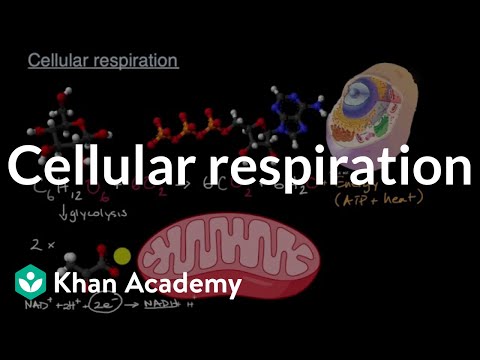

Worksheet: Organisms (Matter Cycling & Energy Flow)- Video 3: Cellular Respiration
Comprehension worksheet generated from the video "Organisms (Matter Cycling & Energy Flow)- Video 3: Cellular Respiration".
Worksheet: Organisms (Matter Cycling & Energy Flow)- Video 3: Cellular Respiration
JaxDoc
Vocabulary
- Cellular Respiration — The process by which cells break down simple food molecules, such as sugar, and release the energy they contain.
- Photosynthesis — The process that happens in chloroplasts where plants use light energy, carbon dioxide, and water to create sugar (glucose) and oxygen.
- Glucose — A simple food molecule, also referred to as sugar (), which is broken down during cellular respiration to release energy.
- Reactants — The starting materials or ingredients that go into a chemical process, like glucose and oxygen for cellular respiration.
- Products — The substances that are formed as a result of a chemical process, such as carbon dioxide, water, and ATP (energy) from cellular respiration.
Questions
Watch the video carefully and answer the following questions based on the information presented.
1.
According to the video (0:46-1:49), what is the relationship between cellular respiration and photosynthesis, and where does each process primarily occur within a cell?
2.
The narrator states that energy is not created during cellular respiration but rather “let out” (1:49-3:48). Explain where this energy is originally stored before it is released.
3.
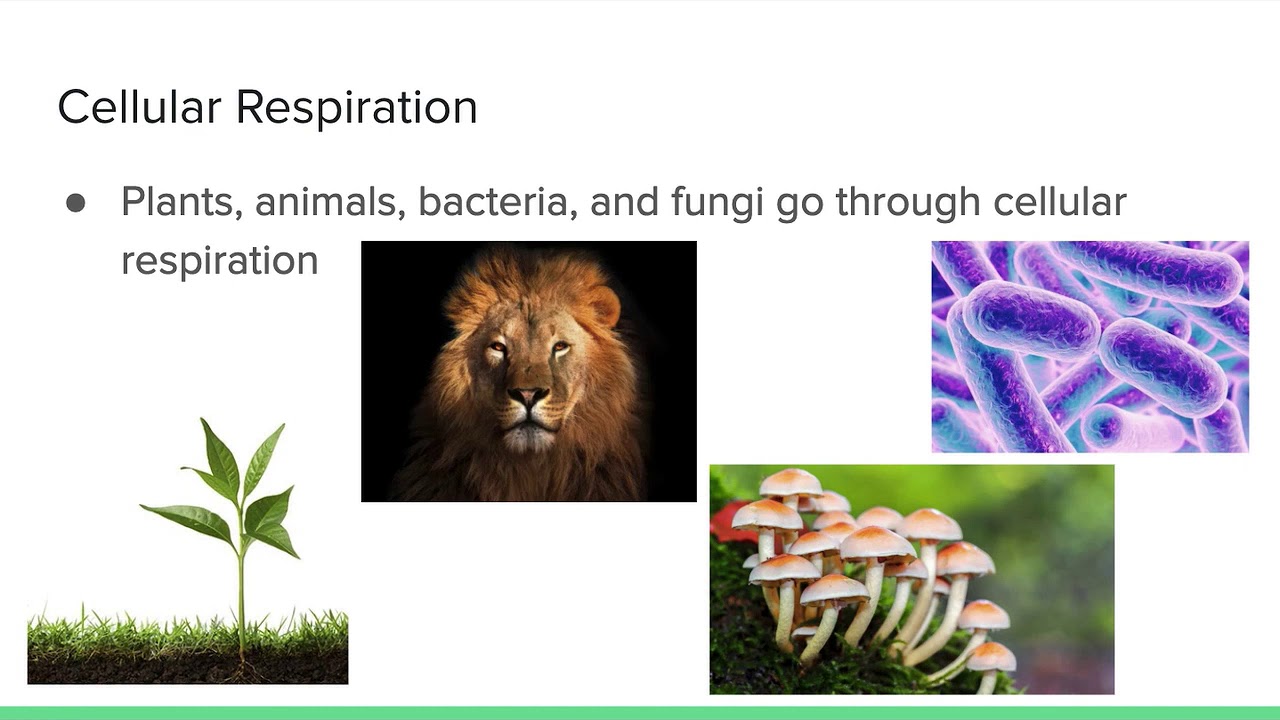
Name three types of organisms mentioned in the video (3:48-4:27) that undergo cellular respiration.
4.
Which of the following are the reactants needed for cellular respiration, as shown in the video’s chemical formula (1:49-3:48)?
5.
The video emphasizes that cellular respiration and photosynthesis are “opposite processes” that form “one big cycle.” Explain how this interconnected cycle demonstrates the cycling of matter and the flow of energy within an ecosystem, using specific examples from the video.
Want materials like this for your lessons?
Jax builds worksheets, study guides, and lesson materials for whatever you're teaching. Free to start, no card needed.