
Worksheet: Stoichiometry Basic Introduction, Mole to Mole, Grams to Grams, Mole Ratio Practice Problems
Comprehension worksheet generated from the video "Stoichiometry Basic Introduction, Mole to Mole, Grams to Grams, Mole Ratio Practice Problems".
Worksheet: Stoichiometry Basic Introduction, Mole to Mole, Grams to Grams, Mole Ratio Practice Problems
JaxDoc
Vocabulary
- Stoichiometry — The calculation of quantities of reactants and products in chemical reactions.
- Molar Ratio — A ratio between the amounts in moles of any two components involved in a chemical reaction, derived from the coefficients in a balanced chemical equation.
- Molar Mass — The mass of one mole of a substance, typically expressed in grams per mole (g/mol).
- Balanced Chemical Equation — A chemical equation in which the number of atoms for each element and the total charge are the same for both the reactants and the products.
Questions
Watch the video carefully and answer the following questions based on the content presented.
1.
Based on Problem 1, Part (a) (0:00 - 3:50), what is the balanced chemical equation for the reaction of sulfur dioxide with oxygen gas to form sulfur trioxide?
2.
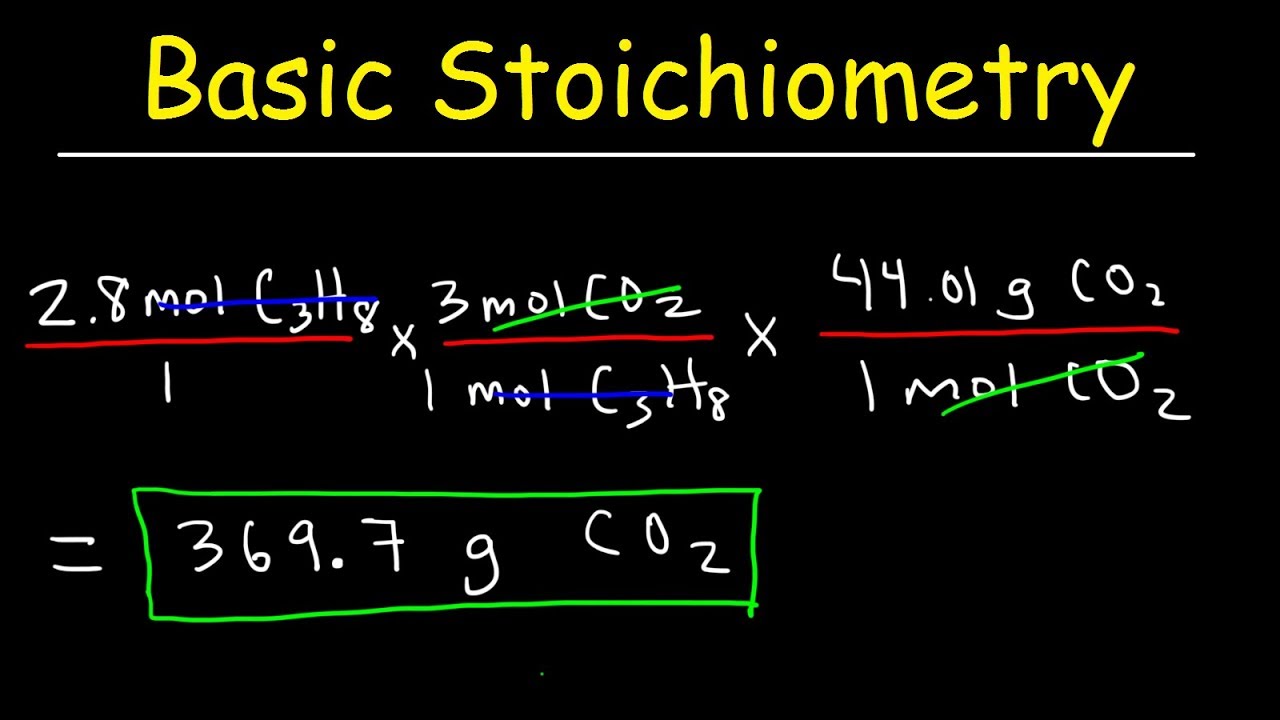
In Problem 2, Part (a) (5:09 - 9:14), the narrator calculates the grams of carbon dioxide produced from 2.8 moles of propane. What is the molar mass of carbon dioxide () used in this calculation?
3.
For Problem 3, Part (a) (16:41 - 22:18), the narrator determines that 172.96 grams of aluminum chloride () will form. What type of stoichiometric conversion is this problem an example of?
4.
Which of the following is NOT one of the three main types of stoichiometric conversions introduced at the beginning of the video (0:13 - 1:08)?
5.
The video emphasizes the importance of a balanced chemical equation for stoichiometry problems. Using an example from the video (e.g., Problem 2, Part (b)), explain why having a balanced equation is essential before performing any calculations.
Want materials like this for your lessons?
Jax builds worksheets, study guides, and lesson materials for whatever you're teaching. Free to start, no card needed.