
HS-PS2-4
High School Science · Next Generation Science Standards · 2013
The Standard
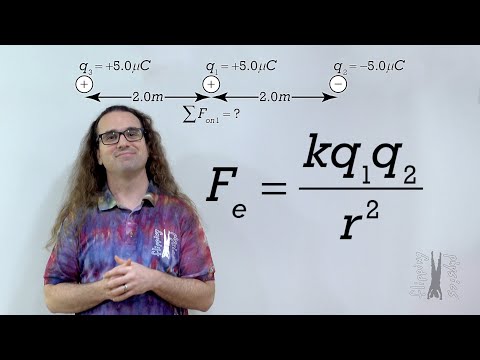
Use mathematical representations of Newton’s Law of Gravitation and Coulomb’s Law to describe and predict the gravitational and electrostatic forces between objects.
Standard Unwrapping
AI-generated as a starting point.Vocabulary
mathematical representationsNewton’s Law of GravitationCoulomb’s Lawgravitational forceselectrostatic forcesobjectsprediction
Skills
- use (mathematical representations of physical laws) #dok2
- describe (forces between objects) #dok2
- predict (the magnitude and direction of gravitational and electrostatic forces) #dok3
- apply (Newton’s Law of Gravitation and Coulomb’s Law to real-world scenarios) #dok3
Learning Targets
- I can recall the formulas for Newton’s Law of Gravitation and Coulomb’s Law. #dok1
- I can identify the variables in the equations relevant to gravitation and electrostatics. #dok1
- I can use provided values to calculate the gravitational force between two objects. #dok2
- I can use provided values to calculate the electrostatic force between two charged objects. #dok2
- I can describe how gravitational and electrostatic forces vary with distance and magnitude of property (mass or charge). #dok2
- I can predict the strength and direction of gravitational or electrostatic forces between objects based on mathematical laws. #dok3
- I can apply Newton’s Law of Gravitation and Coulomb’s Law to solve real-world physics problems. #dok3
Big Ideas
- Both gravitational and electrostatic forces can be described and predicted using mathematical laws that relate the properties of objects and their distances.
- Understanding the similarities and differences between Newton’s Law of Gravitation and Coulomb’s Law allows us to predict and explain interactions between masses and charges in the universe.
Essential Questions
- How do Newton’s Law of Gravitation and Coulomb’s Law describe the forces between objects?
- What variables determine the magnitude and direction of gravitational and electrostatic forces?
- How does changing the distance between two objects alter the forces between them?
- In what ways are gravitational and electrostatic forces similar and different?
- How can mathematical models be used to predict physical interactions in the real world?
Make a worksheet for this standard
Jax builds worksheets, study guides, and lesson materials aligned to what you're teaching. Free with a ClassJax account, no card needed.