
Worksheet: Work, Energy, and Power: Crash Course Physics #9
Comprehension worksheet generated from the video "Work, Energy, and Power: Crash Course Physics #9".
Worksheet: Work, Energy, and Power: Crash Course Physics #9
JaxDoc
Work, Energy, and Power: Crash Course Physics #9CrashCoursehttps://www.youtube.com/watch?v=w4QFJb9a8vo
Vocabulary
- Work — What happens when you apply a force over a certain distance to a system.
- System — Whatever section of the universe you happen to be talking about at the time.
- Energy — The ability to do work.
- Kinetic Energy — The energy of motion.
- Potential Energy — Energy that could be used to do work.
Questions
Watch the video and answer the following questions based on the information presented.
1.
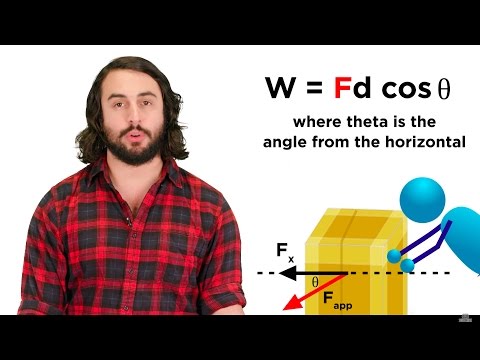
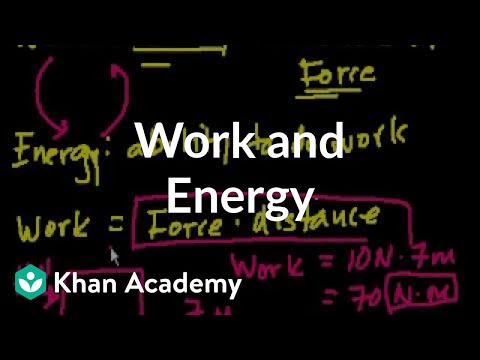
According to the video, what is the general formula for calculating work when a constant force is applied over a certain distance, and what are the standard units for work?
2.
The video introduces Hooke’s Law in the context of spring potential energy. State Hooke’s Law as presented in the video and explain what the constant
k represents.3.
The narrator states that physicists often use two different equations to describe average power. What are these two equations?
4.
Which of the following is an example of a non-conservative system as described in the video?
5.
The video discusses the principle that “energy can neither be created nor destroyed.” Explain how this principle, also known as the conservation of energy, applies to the example of the simple pendulum. Describe how kinetic and potential energy transform within the pendulum’s motion to uphold this principle.
Want materials like this for your lessons?
Jax builds worksheets, study guides, and lesson materials for whatever you're teaching. Free to start, no card needed.