

Worksheet: Continental drift theory & Plate tectonics - grade 10 geography
Comprehension worksheet generated from the video "Continental drift theory & Plate tectonics - grade 10 geography".
Worksheet: Continental drift theory & Plate tectonics - grade 10 geography
JaxDoc
Vocabulary
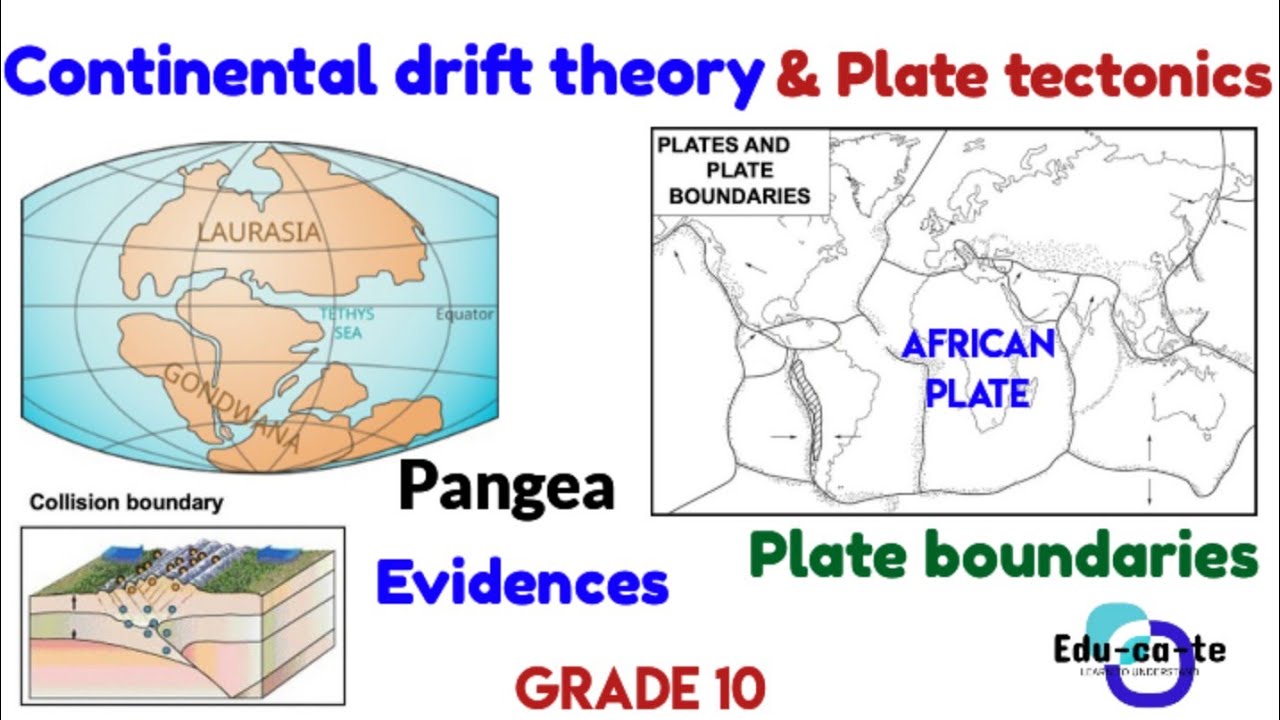
- Continental Drift Theory — The theory suggesting that all continents were once joined as one supercontinent but have since separated and moved apart.
- Pangea — The name of the single, large supercontinent that Alfred Wegener proposed existed approximately 250 million years ago, before breaking apart.
- Plate Tectonics — The theory explaining how continents move, stating that the Earth’s crust is divided into large plates that are constantly moving due to forces within the Earth.
- Divergent boundary — A type of plate boundary where two tectonic plates move away from each other, often leading to the formation of new crust as magma rises to fill the gap.
- Convergent boundary — A type of plate boundary where two tectonic plates move towards each other, which can result in collisions, subduction, or the formation of mountains.
Questions
Watch the video carefully and answer the following questions based on the information presented.
1.
According to Alfred Wegener, which two modern continents fit together like pieces of a puzzle, providing early evidence for his theory? (0:15)
2.
The video describes the movement of continents over time. Briefly explain the transition from Pangea to the modern-day continents, mentioning the intermediate supercontinents. (4:05)
3.
Besides the continents fitting together, name two other types of evidence mentioned in the video that support the Continental Drift Theory. (7:55)
4.
Which type of plate boundary is characterized by plates moving towards each other, causing rocks to be uplifted and forming fold mountains? (19:48)
5.
The video explains three ways plates can move relative to each other: divergent, convergent, and transform. Choose one of these movements and describe a real-world geological feature or event (e.g., a mountain range, an ocean ridge, an earthquake zone) that is a direct result of this specific plate boundary interaction, as implied by the video’s explanations.
Want materials like this for your lessons?
Jax builds worksheets, study guides, and lesson materials for whatever you're teaching. Free to start, no card needed.


