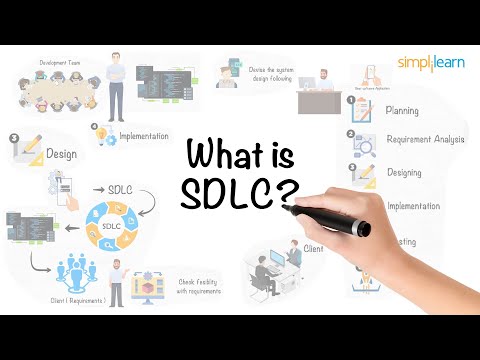

Worksheet: The Most Comprehensive Explanation of the Software Development Life Cycle (SDLC) in 7 Minutes!
Comprehension worksheet generated from the video "The Most Comprehensive Explanation of the Software Development Life Cycle (SDLC) in 7 Minutes!".
Worksheet: The Most Comprehensive Explanation of the Software Development Life Cycle (SDLC) in 7 Minutes!
JaxDoc

Software Development Life Cycle (SDLC) Explained in 7 Easy PhasesThe Career Acceleratorshttps://www.youtube.com/watch?v=mmVXL0LzLks
Vocabulary
- SDLC (Software Development Life Cycle) — A process used by software developers or development teams to design, develop, test, and deploy high-quality software.
- Planning/Initiation Phase — The initial stage where the software idea is conceived or analyzed, focusing on understanding the project’s scope, feasibility, resources, timeline, and potential risks.
- Analysis Phase — The stage dedicated to gathering detailed information and documenting every specific requirement the software needs to fulfill.
- Design Phase — The phase where detailed specifications and blueprints for the software are created, including decisions on technology stack, databases, user interfaces, and other components.
- Deployment/Implementation Phase — The critical moment when the developed and tested software solution is released and made available to the end users.
Questions
Watch the video and answer the following questions based on the information presented.
1.
At 0:46, the narrator uses building a house as an analogy for SDLC. What specific aspects of house building does he compare to the planning phase of software development?
2.
According to the video (2:36), what is the primary role of Business Analysts in the Analysis phase of the SDLC?
3.
The narrator describes the Testing phase starting at 4:35. What is the main objective of this phase, and what specific types of issues are testers looking for?
4.
According to the video, which phase of the SDLC is compared to bringing in an architect to draw up blueprints for a dream house?
5.
The narrator states that understanding SDLC is crucial even if one is not writing code, because it helps to “see the bigger picture” and “communicate effectively with developers.” Reflect on a hypothetical scenario where a non-technical role (e.g., a marketing specialist or a customer support manager) needs to interact with a software development team. Explain how knowing the SDLC phases would benefit this non-technical professional in their communication and collaboration with the team.
Want materials like this for your lessons?
Jax builds worksheets, study guides, and lesson materials for whatever you're teaching. Free to start, no card needed.