
Worksheet: What Are In-Text Citations?
Comprehension worksheet generated from the video "What Are In-Text Citations?".
Worksheet: What Are In-Text Citations?
JaxDoc

Vocabulary
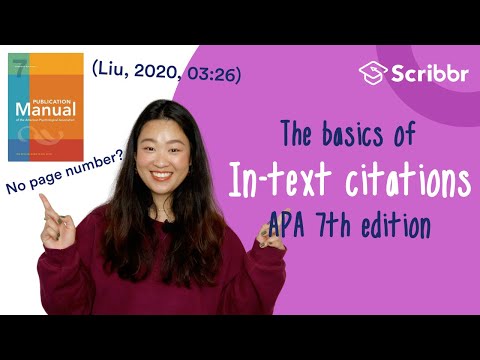
- In-text Citation (Parenthetical Citation) — A brief reference within the body of a paper that connects borrowed information to a full citation in the bibliography.
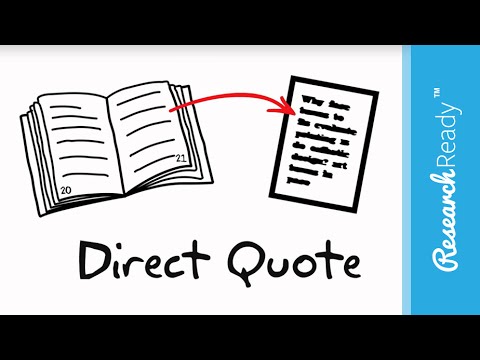
- Direct Quote — Information taken word-for-word from a source, which must be enclosed in quotation marks.
- Paraphrase — Explaining or restating information from a source in your own words.
- Bibliography — A list of all sources used in a research assignment, providing complete publication details for each source.
Questions
Watch the video carefully and answer the following questions based on the information presented.
1.
According to the video (0:11), what two main benefits do in-text citations provide to a student’s research assignment?
2.
List the four parts of an in-text citation in the correct order, as demonstrated in the video (0:58-1:07).
3.
The video provides an example sentence: “Danny thinks pandas are the ‘most amazing creatures of all time’ (Murphy 27).” (1:08-1:14). Based on this example, where should the period be placed in relation to the in-text citation?
4.
Based on the video’s explanation (0:43-0:51), when should you include an in-text citation in your paper?
5.
The video emphasizes the connection between an in-text citation and a bibliography citation (2:20-2:30). Explain how these two types of citations work together to provide a complete picture of your sources, and why this interconnectedness is vital for academic research.
Want materials like this for your lessons?
Jax builds worksheets, study guides, and lesson materials for whatever you're teaching. Free to start, no card needed.