
Worksheet: Evidence for evolution | Common ancestry and phylogeny | High school biology | Khan Academy
Comprehension worksheet generated from the video "Evidence for evolution | Common ancestry and phylogeny | High school biology | Khan Academy".
Worksheet: Evidence for evolution | Common ancestry and phylogeny | High school biology | Khan Academy
JaxDoc
Vocabulary
- Evolution — The process by which different kinds of living organisms are thought to have developed and diversified from earlier forms during the history of the earth.
- Natural Selection — The process whereby organisms better adapted to their environment tend to survive and produce more offspring.
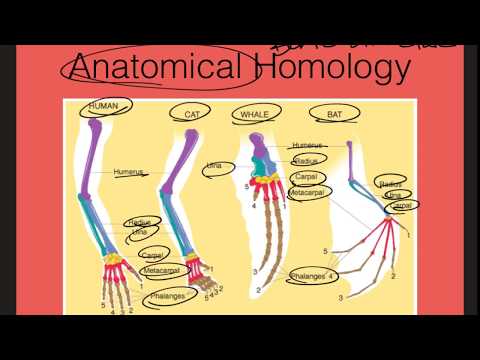
- Homologous Structures — Things that have similar structures, similar position, similar ancestry, but not necessarily the exact same function.
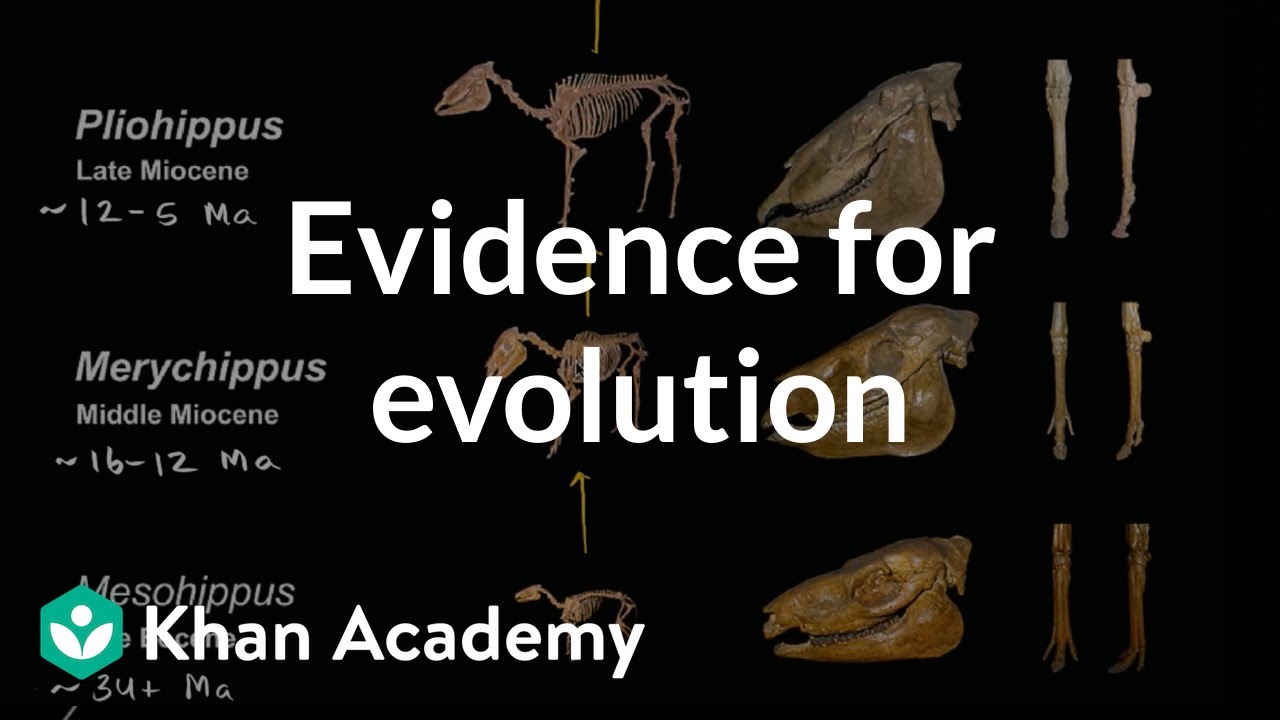
- Fossil Record — The record of fossils within rock strata that provides evidence of past life on Earth and changes over time.
- Microbiology — The study of microscopic organisms and processes, including genetics, which provides strong evidence for evolution.
Questions
Watch the video and answer the following questions based on the information presented.
1.
The video outlines three broad types of evidence supporting evolution. Name and briefly describe two of these types. (1:17)
2.
The video uses the forelimbs of humans, dogs, birds, and whales as an example of homologous structures. Explain how these structures, despite having different functions, provide evidence for common ancestry. (3:12)
3.
How does the fossil record, as illustrated by the evolution of horse-like animals, demonstrate a gradual process of change over millions of years? (5:26)
4.
According to the video, what percentage of genetic similarity do humans share with chimpanzees?
5.
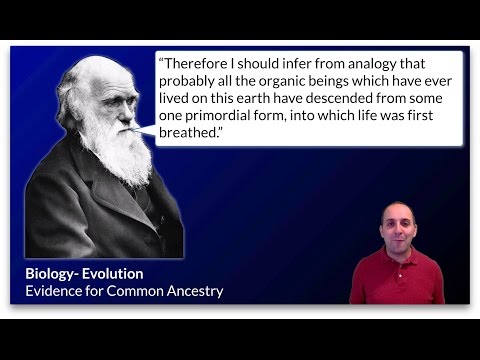
The video begins with Theodus Dobzhansky’s quote, “Nothing in biology makes sense except in the light of evolution.” Reflect on this statement. How do the various lines of evidence presented in the video (structural, microbiological/genetic, and direct observation) contribute to making sense of the biological world through the lens of evolution?
Want materials like this for your lessons?
Jax builds worksheets, study guides, and lesson materials for whatever you're teaching. Free to start, no card needed.