Worksheet: Homeostasis - BEST Way to Learn Negative Feedback Loops + Blood Pressure & Body Temperature Examples
Comprehension worksheet generated from the video "Homeostasis - BEST Way to Learn Negative Feedback Loops + Blood Pressure & Body Temperature Examples".
Worksheet: Homeostasis - BEST Way to Learn Negative Feedback Loops + Blood Pressure & Body Temperature Examples
JaxDoc

Vocabulary
- Homeostasis — The process by which our bodies maintain stable internal conditions despite external changes.
- Set Point — The ideal internal condition or value that the body attempts to maintain (e.g., 120/80 mmHg for blood pressure).
- Sensor — A component that detects changes in an internal condition (e.g., nerve cells, stretch receptors).
- Integrator (Control Center) — A component (often the brain) that compares the detected condition to the set point and decides on a corrective action.
- Effectors — Components (e.g., muscles, glands, blood vessels) that carry out the corrective actions determined by the integrator.
- Negative Feedback Loop — A process in homeostasis where the body makes an opposite change to correct a deviation from the set point, bringing the condition back towards the ideal.
Questions
Watch the video carefully and answer the following questions based on the information presented.
1.
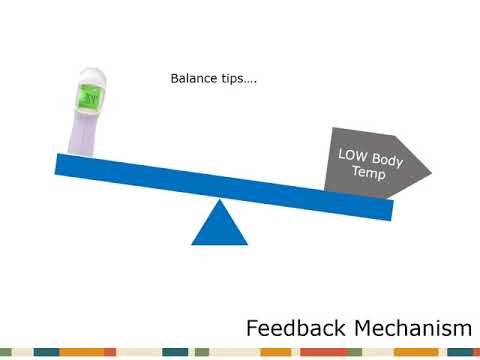
At 0:54, the narrator uses balancing a ruler as a metaphor for homeostasis. How does this metaphor illustrate the idea that a condition is rarely exactly at its “set point” but is always being corrected towards it?
2.
In the example of blood pressure regulation (3:21), what are the specific blood vessels mentioned that contain the sensors for detecting blood pressure changes?
3.
When body temperature gets too low (7:14), the hypothalamus acts as the integrator. Describe two specific effectors that the hypothalamus signals to raise the body temperature back to the set point.
4.
Which of the following best describes why the processes discussed in the video are called “negative feedback loops”?
5.
Think about a time when your body’s homeostasis was challenged (e.g., after intense exercise, in a very cold environment, or after eating a large meal). Describe how your body might have used the principles of a negative feedback loop (sensor, integrator, effectors, set point) to return to a stable internal condition. Be specific about the condition, the set point, and the actions taken by your body.
Want materials like this for your lessons?
Jax builds worksheets, study guides, and lesson materials for whatever you're teaching. Free to start, no card needed.